

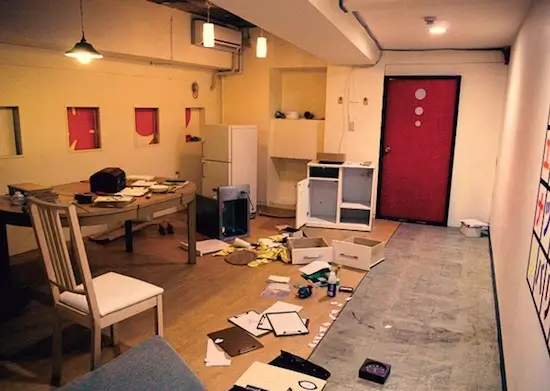
It was late 2013 when, in the heart of Athens, in an old neoclassical apartment building from the 1930s, in the shadow of the Hilton Hotel, the story of the first Greek escape rooms, known and popular abroad as escape rooms, began. Then, timidly, Greek groupies of horror, adventure, metaphysics and mystery stories began to reintroduce themselves to the heroes of Agatha Christie, Stephen King, Arthur Conan Doyle and Dan Brown, this time seeking new communication codes. In a hermetically sealed room and with only an hour and a half to escape, they become accomplices and participants in thriller scenarios with puzzles, murders, disappearances, unexplained phenomena and deadly secrets. Interactivity, adrenaline rushes and well-thought-out storytelling with a happy ending that brings their release from the confinement room.
Since then, the rooms have increased, the ideas have changed and much has changed in the landscape of the market in question. New technologies, impressive digital media with sound and visual effects that make you confuse truth with lies, and even scenarios enhanced by the presence of experienced actors, provide the necessary push for the Escape Rooms theme to go a step further in our country.
Today, therefore, Escape Rooms in Greece may exceed 200 businesses, with over 500 themed games in about 30 regions of Greece (Athens is the leading force with about 130 businesses, followed by Thessaloniki and Rhodes in third place), however, the "mother" and ambassador of this entertainment innovation undoubtedly remains the homeland of almost every technological miracle, Japan. It all started in Kyoto, Japan, in the summer of 2007, when the entrepreneurial genius of 35-year-old publisher Takao Kato gave substance to the philosophy of escape games that until then had only been found on mobile phones and - in an even more primitive form - on PCs (users participated with their mouse in point-and-click escape and mystery-solving games). His company, SCARP, opened the first Escape Room there, with a single room ideal for 5-6 players, with a scenario based on solving difficult puzzles and with extremely low escape rates. Over the years, SCARP decided to transfer the concept of popular video games to even more specially designed rooms, reaching today having studied the topic of "Real Life escape games" so thoroughly that it even has a thematic escape room outdoors in which up to a hundred players participate simultaneously.
As for the other major Asian countries (China, Singapore and Malaysia), they soon joined the game, initially "dragging" America and then Europe, Australia and Canada (the number of companies worldwide today exceeds 3,000).
In Europe, in particular, the Escape Rooms trend began in Budapest in 2011, when the company Parapark, unaware that the concept had already taken off in Asia, decided, inspired by the logic of video games, to set up the first escape room (it later opened 20 more throughout almost all of Europe and in Australia). Almost simultaneously, the first SCRAP franchises in America (“Real Escape Rooms”) were launched, starting in California and specifically in San Francisco, where more than 6,000 visitors passed through in its very first year of operation. The terrible thing is that today the average waiting time to make a booking in this room exceeds 30 days.