

Famous escape room fans on secret missions

Famous escape room fans on secret missions 

Who said that the entertainment and suspense of an escape room is only for ordinary mortals? Celebrities are also attracted to the secrets and mysteries of escape rooms and not only say yes to this challenge but also have fun with it and do not hesitate to even advertise it through their social media accounts.

The first teacher was former US President Barack Obama, who on Christmas 2016, while on vacation in Hawaii, played with his daughters Sasha and Malia in one of the escape rooms at the Waikiki Breakout venue.

The Obama family chose the Mission Manoa room, the most difficult room in Waikiki Breakout, from which they managed to escape literally in the blink of an eye, with just twelve seconds left before the time ran out! Their mission was - as secret agents - to escape the room before the dangerous group of terrorists could find them and capture them. Coming out of the room, Obama stated that all the hard work was done by his eldest daughter Malia and that if they hadn't had her on their team, things would have been very bad for them.

A year ago, from the same exact room, American Olympic champion and famous international soccer player, Abby Wabbach, "escaped" with her teammate, also Olympic champion, Sydney LaRue. In fact, Obama, jokingly, in his statements about his experience from this particular room, compared the escape time of the two famous US athletes (they left one minute before the end) with the time of his own team, admitting his defeat by the US women's national soccer team.

However, other footballers have also shown their "playful" disposition in escape rooms in the past. A typical case is Arsenal footballers Danny Welbeck, Petr Cech and Per Mertesacker, who played against the team's veteran players, Ray Parlour and Martin Keown. The escape room was "set up" as a pop up inside the Arsenal stadium and the two teams, the "players" and the "legends", were asked to escape from their coach's office, having only 20 minutes at their disposal. The puzzles they had to solve were five in total, while the players managed to leave the room first, with a time of 11' and 50', compared to the legends who scored 13' and 26'.

As for the entertainment industry, popular actor Chris Evans, known as Captain America and ambassador of the non-profit organization Christopher's Haven, to support families with children with cancer, started and continues, with the knowledge and experience of the company Omaze, a huge charitable campaign, essentially "selling" the opportunity to donors-benefactors of the Organization, to lock themselves away for an hour with him in a costumed escape room, inspired by the adventures of Captain America. The supervision, organization, and setup of this entire initiative is led by Omaze, the company that became known for using the support of the American star system to carry out various charitable actions (Sarah Jessica Parker has lunch with you if you donate to the "Next" foundation to support people with autism, Bono of U2 plays mini golf with you if you support "Red", the organization against AIDS, and many other cases).

In fact, in order for Omaze to further advertise this initiative, it uploaded a video on YouTube starring Chris Evans as a bully-game master and "victims" unsuspecting players who entered a comic store in Boston as customers and suddenly found themselves chatting with a large, cloth Captain America doll and trying to solve a series of puzzles. If they successfully completed their mission, they were led to a secret room where the famous actor greeted them.

If you go looking for it, remember that the hilarious reactions of the players both during the game and at the end will make you press replay again and again!
Game master, this stranger is your friend!

Game master, this stranger is your friend!

Your "best" friend for as long as you are trapped in the room, your guardian angel in the success of your mission, your ally in every step that brings you closer to the correct code for your escape.

But what exactly are the responsibilities of the game master? First of all, he must know the rooms he works with inside and out. Each game master takes charge of specific rooms, which certainly do not change at the last minute, not even in the slightest, without first informing him.

He always arrives at least half an hour before his first group arrives. He sets up the room, puts things in the right place and makes sure that everything is working properly before closing the door behind him. Once the group of players arrives, he leads them into the room and explains the terms and rules of the game (what they can look for and where it is forbidden, what to watch out for, how they will communicate with him during the game and how they will operate in case one or more players want to leave the game early, etc., etc.). Some escape rooms follow the policy according to which the game master must explain the scenario and plot to the players, giving them basic information about their mission in advance.

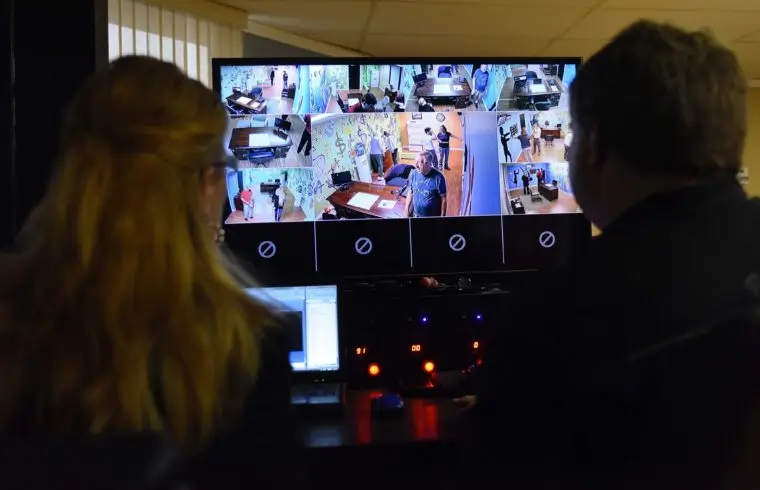
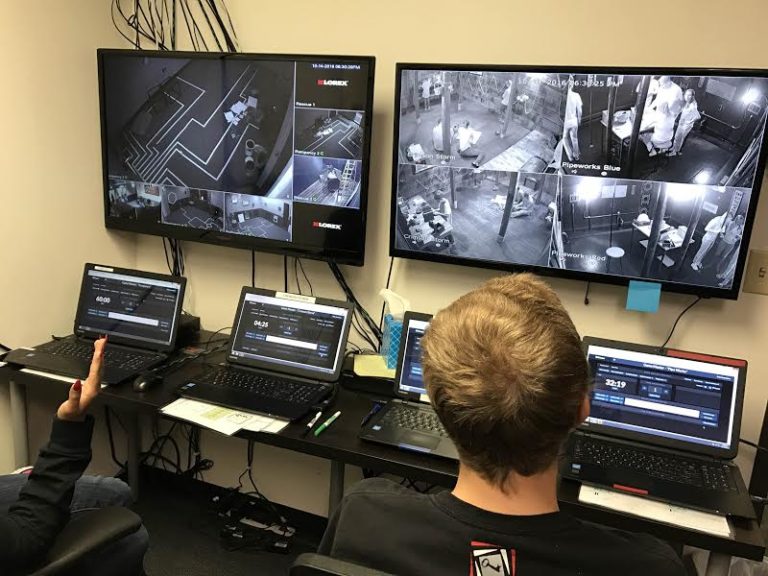
Then, for the next hour or an hour and a half, the game master is locked in a control room from which he supervises the players in his room via hidden cameras. But he certainly does more than that. Through a computer screen, he communicates with the prisoners, giving them clues each time so that they can successfully solve the puzzles. Step by step, these clues, when wisely decoded, “open” the escape path a little more, until the players solve the last puzzles and ultimately end up with the knowledge, that is, the decryption, of the long-awaited code. Therefore, one of the qualifications of the right game master is the correct and quick typing of instructions, so that the players, on the one hand, understand the messages he wants to convey to them and, on the other hand, do not waste time communicating with each other.

If the players ultimately fail to escape, the game master either shows them the steps they could have taken to successfully complete their mission, or – and this depends entirely on the company – simply opens the exit door for them, avoiding revealing the secrets of the puzzles so that they can try the room again if they wish. If they manage to escape the room within the time limit, the game master “celebrates” with them and usually takes a group photo of them holding signs like “We have escaped”, “We Won”, “We are the champions”, etc.

As for the characteristics of a perfect game master, they clearly include high levels of energy, politeness, ingenuity, the ability to "play ball" communicatively with the players and of course to be cheerful and have a good sense of humor (players always like that!). But above all, he must have the ability to concentrate completely on what he is watching. To not miss a moment of the players' action, to pay attention to even the smallest detail in their movements.

In any case, the role of the game master is undoubtedly charming and certainly crucial to the success of a group's mission.

Ten different personalities you can meet in an escape room

Ten different personalities you can meet in an escape room

It's incredible how people truly transform when they're under intense stress. So, when a group of friends - or even just acquaintances - are locked in an escape room, the characters that emerge can surprise even those who boast the highest levels of self-awareness.

These are the ten -strongest- personalities you will encounter in an escape room:

  1. The veterans: These are, of course, those with significant previous experience in similar games, and this is something you understand from the very first moment, either from the advice they give you, as they perceive the heavy sense of responsibility, or from the self-confidence they exude, even before entering the room, "shouting" from afar: "I came to help the team"!
  2. The hyper-analytical players or - according to our English friends, the «bloody analytical players: They are the ones who want to win at all costs every time, that's why they "blow up" the game master with questions, not only before the game starts but also during it. They make sure to collect every possible piece of information and get irritated when they feel that something is missing! In reality, these players usually make more noise than they help their team in deciphering the clues, while they constantly complain that the help the game master gives them is not enough!
  3. 3. The Time Maniacs: They make sure to keep you informed about every minute that passes from the first moment you enter the room until the last. You usually find them under or opposite the clock - stopwatch, so that they don't lose touch with time. Of course, these are also the types that stress you out the most, obviously because they don't stop reminding you that time passes and ends. However, useful and necessary, but only to a certain extent!
  4. The Entertainers: They are the players who probably joined the group by chance, and that's because they almost always say yes to every new challenge and adventure. They participate in the game - and often dynamically - but in the wrong way because they are unable to concentrate on their mission. In fact, their favorite habit is to give random answers to the puzzles, clearly showing that they have not understood the philosophy behind an escape room. But they are having a good time and it shows! Therefore, the only sure thing is that - especially if you don't take things too seriously - you will have fun with them from beginning to end.
  5. Last minute heroes: These players enter an escape room just to experience the glory of victory. It doesn't matter how much they have helped their team win throughout the game. What matters is that they are at the last moment, in the right spot, letting the team do all the hard work and at the end they can shout that they won and brought victory! They are usually far away in the room or are in places that don't show interest and as soon as they realize that the team is five minutes away from solving the puzzle, they approach, grab the lock - or the respective item - and wait for the others to cheer them on!
  6. The Disobedient: Here we find the most difficult category of players. Those who almost always cause a headache for the game master of their room. They search in places where they have been made clear, straight from the beginning, that they should not search. They move furniture, hang things from the walls, use excessive force when manipulating the objects in the room until they hear something break and generally destroy everything they find in their path. Of course, at the end of the test, they always "duck" when the damage they caused is realized.
  7. The leaders. Their voices are the ones that drown out any other voice in the room. They usually move in the center, so they can control your every move. However, they always get in front of you every time you approach an element, interrupt you, get stuck in what they have in mind and hardly recognize your right to take the initiative. In fact, they go crazy with their joy of sharing responsibilities, to such an extent that they keep everyone busy with something, from beginning to end. If you generally consider yourself versatile and low-profile, accept the test of being locked in the same room with such a guy. Otherwise, you won't see the time to escape!
  8. The administrators: They are the ones who manage various types of information with precision and consistency: From the group's time and how it will be distributed correctly, so that it is not wasted pointlessly, to the locks you have left to try, the keys you still have to find or the possible numerical combinations - and how many there are each time in total - that could lead you to the correct code. The most likely scenario is that these guys have also made the phone or online reservation of the room. Freaks control from the moment the idea of ​​visiting an escape room was born until the end.
  9. The Persistent: They may have checked a particular spot in the room for clues, found absolutely nothing, and yet continue to return to the same spot again and again, until they are convinced that there is no “hidden treasure.” These are the players who waste their time and do not communicate with the rest of the group, in their attempt to satisfy their compulsive and persistent instincts. They simply do not know when it is time to stop and move on. And this is something they carry outside the escape room.
  10. The Silent Observers: You find them in almost every group. They are the ones who show that they have not understood where they are, what is going on with the game or what they need to do to help their group escape. They did not lock themselves in the room for glory, nor to gain the reward, sympathy or interest of the others and in fact not even to escape. As for how they ended up there? The most likely scenario is that they found themselves there by chance because of the company.